
Dear friends,
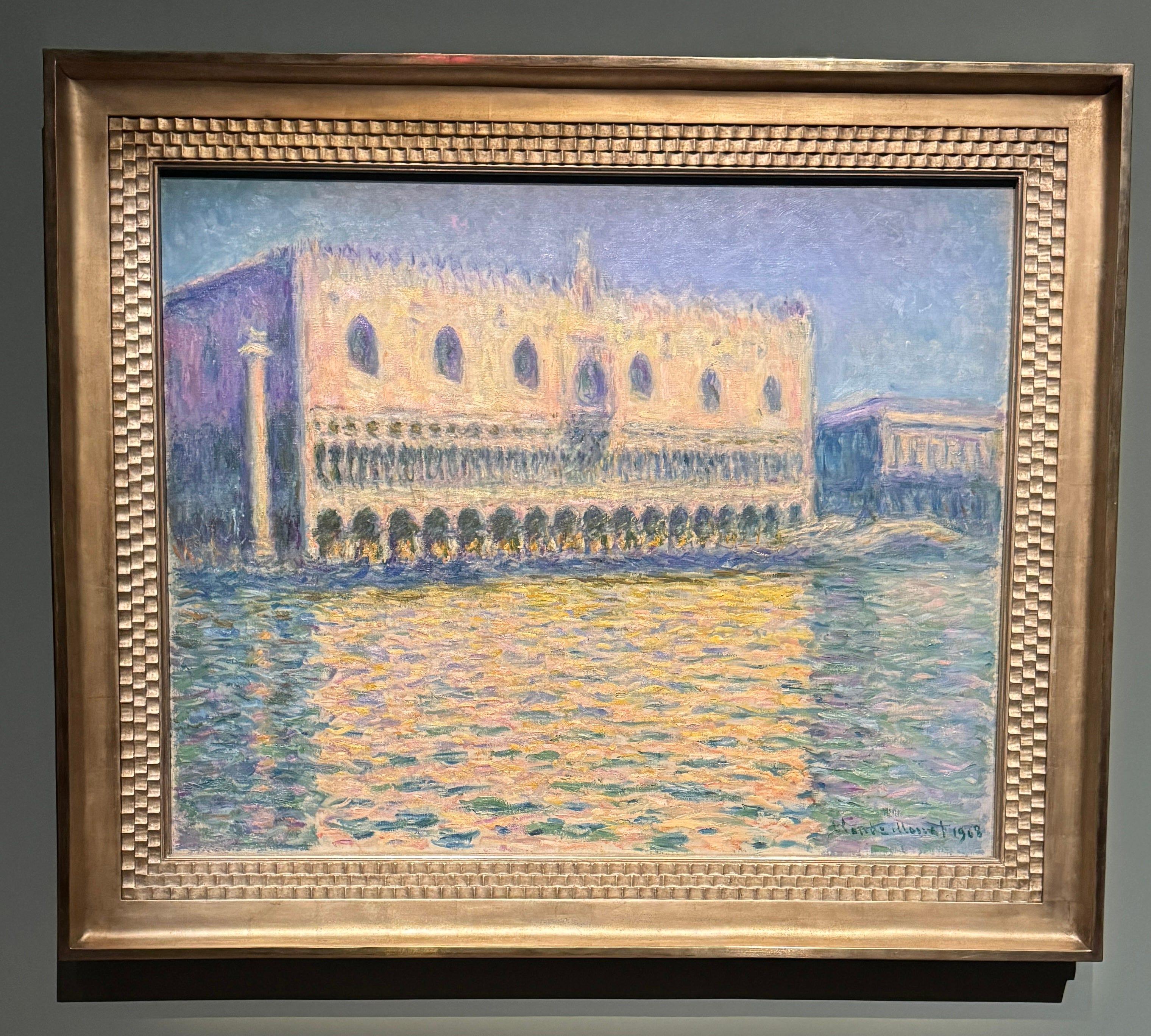
Walking through Monet & Venice at the Brooklyn Museum felt like entering a city made less of stone than of air and light. Venice appears not as a place to be navigated, but as a mirage. Buildings rise from water only to dissolve back into it.
Monet offers us a few architectural details: façades, a tower, a darkened passageway or window. Everything else softens. Water, sky, and building melt together into opalescent pastels. The golden light of end-of-day, pale pinks, lemon yellow and tangerine orange of morning. At times it feels like looking through a cloud. Forms hover, layered upon layers, growing ever more indistinct.
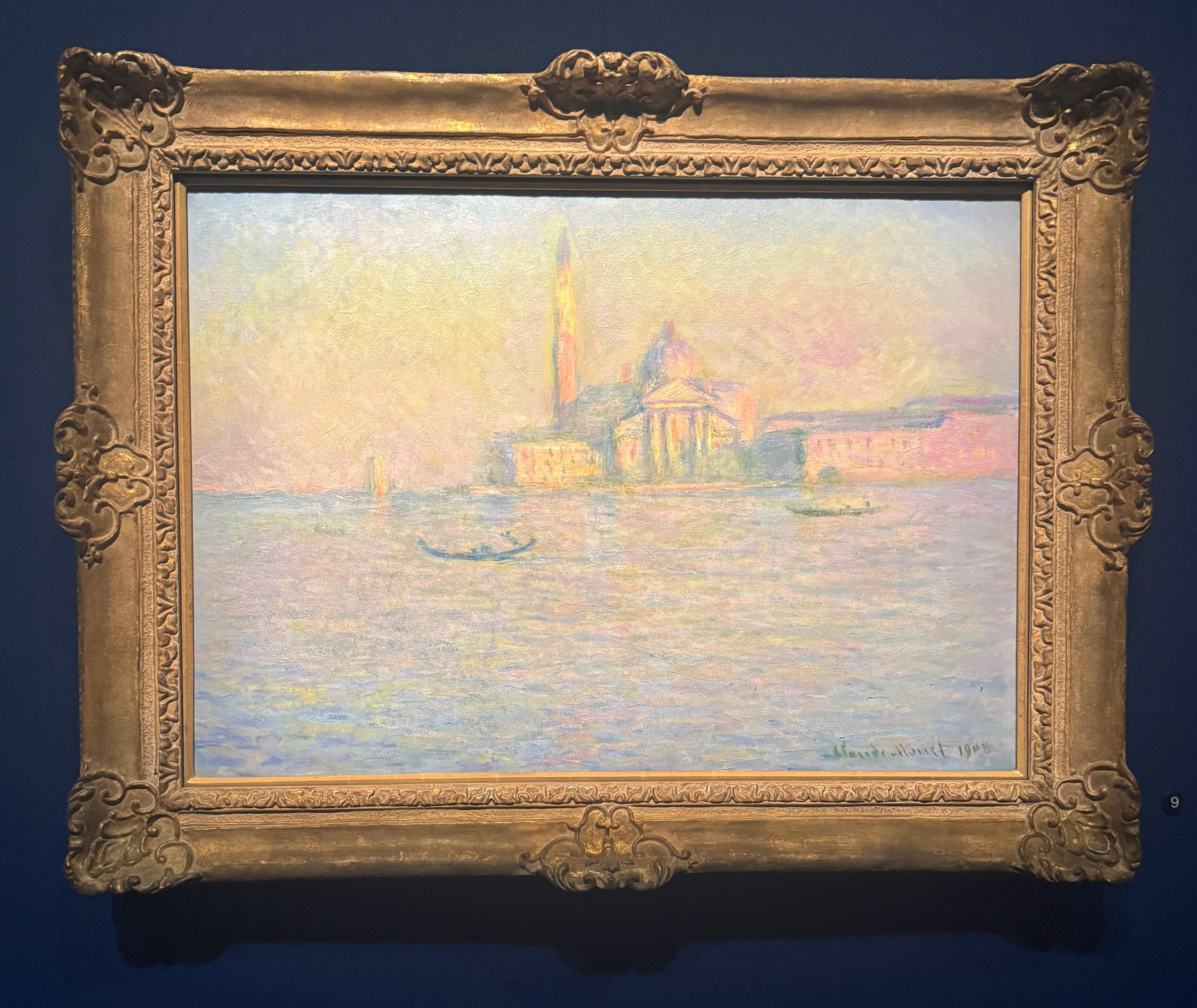
What stayed with me was the tension between solidity and dissolution. Venice carries the weight of history, commerce, and grandeur, yet in Monet’s hand the city loosens & turns luminous. Once a center of power, Venice is now slowly sinking, flooding, receding. In a century, the city may resemble Monet’s Venice more than today.
There are no people in these paintings. You move through them alone. Venice becomes a solitary journey, a city turned into a place for reflection.
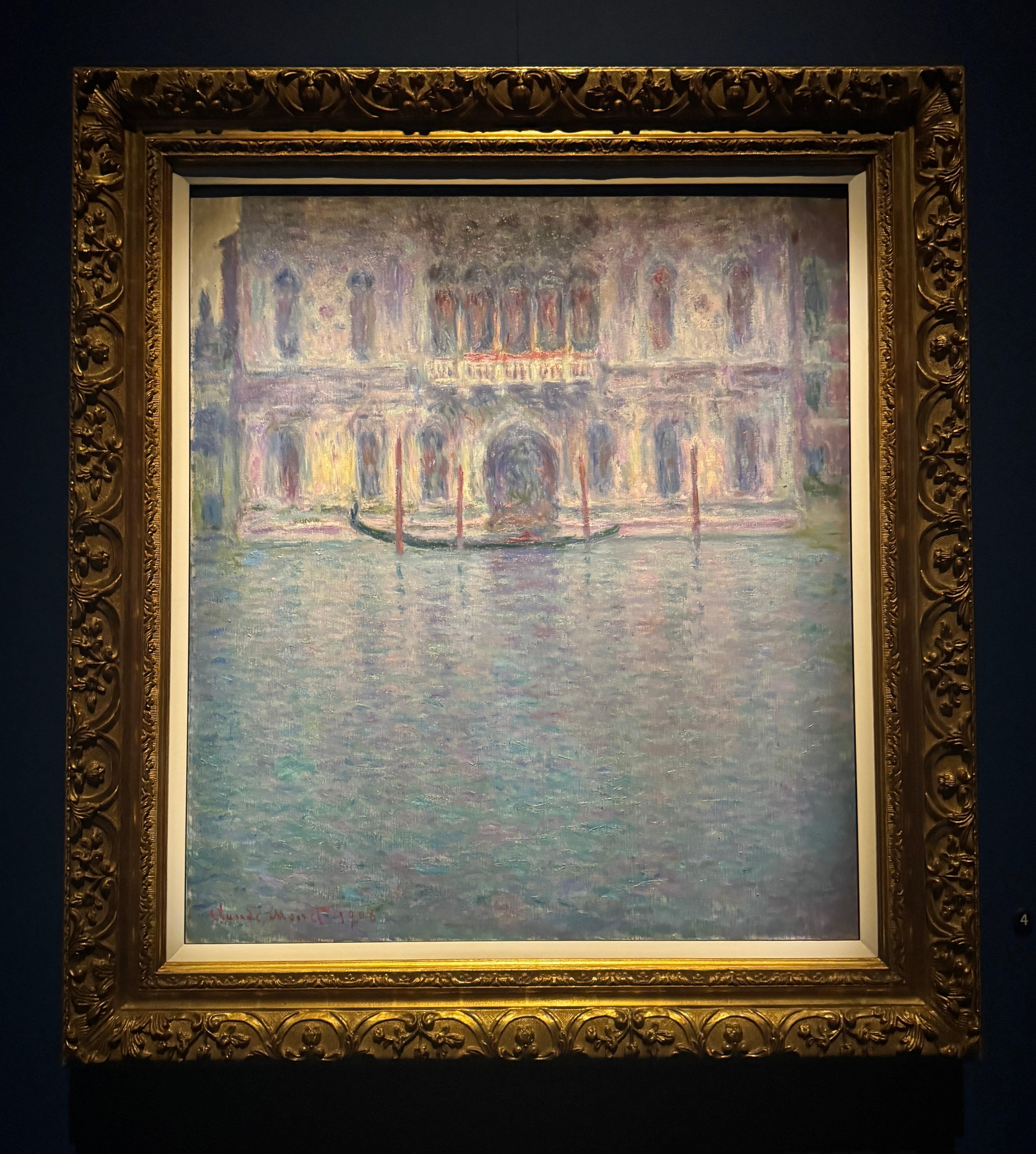
Time is everywhere. Each painting captures an instant, yet each required hours of labor. Many were finished later in Giverny, turning direct observation into memory. These works are about longing and looking back. Monet was older; his wife Alice had already died. Venice becomes charged with personal history, with the ache of time remembered.
In the end, Monet is painting what he called l’enveloppe: “the air in which the bridge, the house, and the boat are to be found—the beauty of the air around them.” Not the object, but the space that holds it.
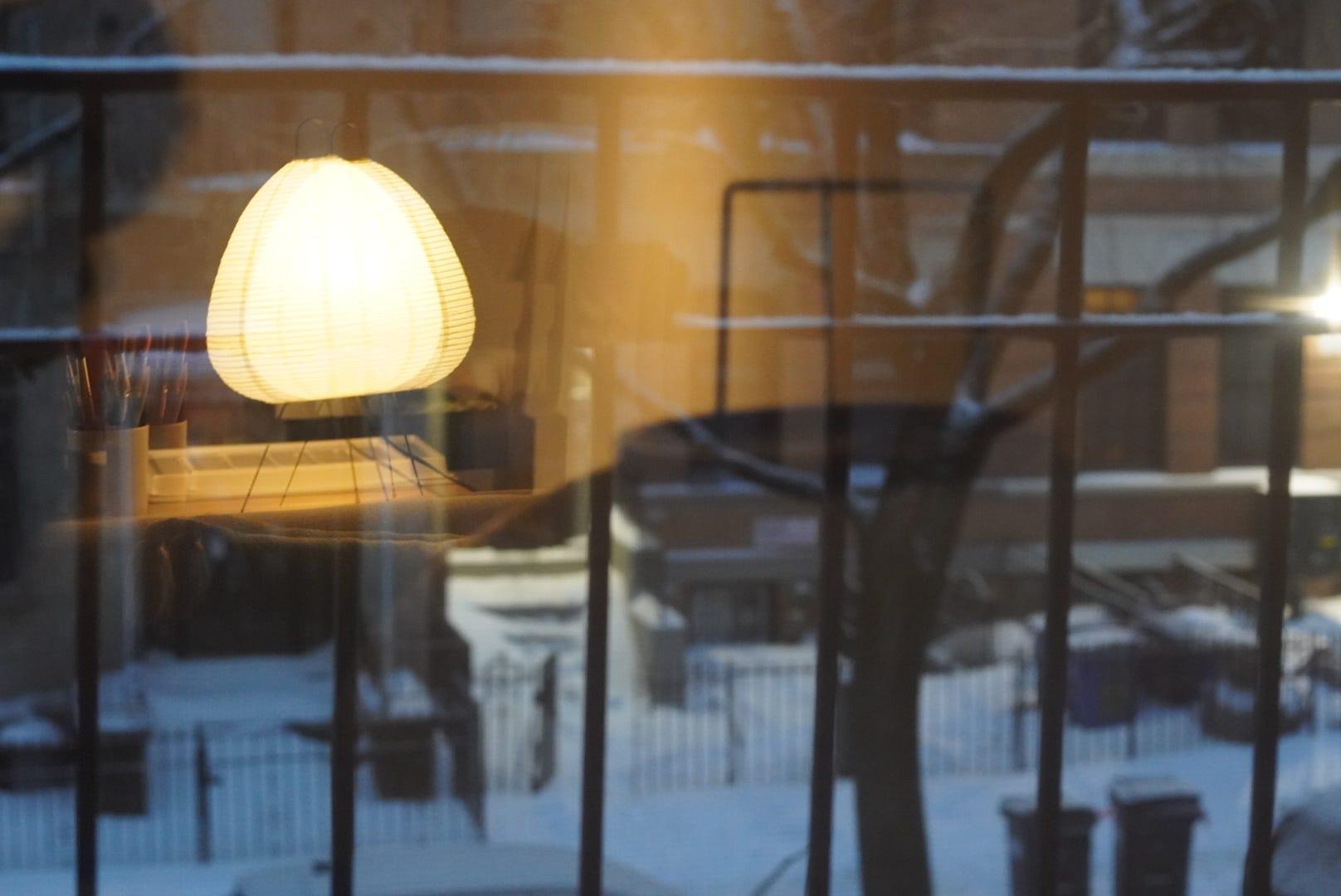
I’ve been thinking about this a great deal in relation to my own studio practice. Lately I’ve been waking before dawn, working in the silent, snowy dark before the house stirs, before footsteps & voices. Those early hours feel suspended, almost weightless. I’m drawn to questions of how a work can hold atmosphere, how form can emerge and recede, how space and place can be felt rather than described.
Like Monet’s Venice, the studio at that hour becomes a place outside of ordinary time. A quiet place where memory, body, and space begin to align.